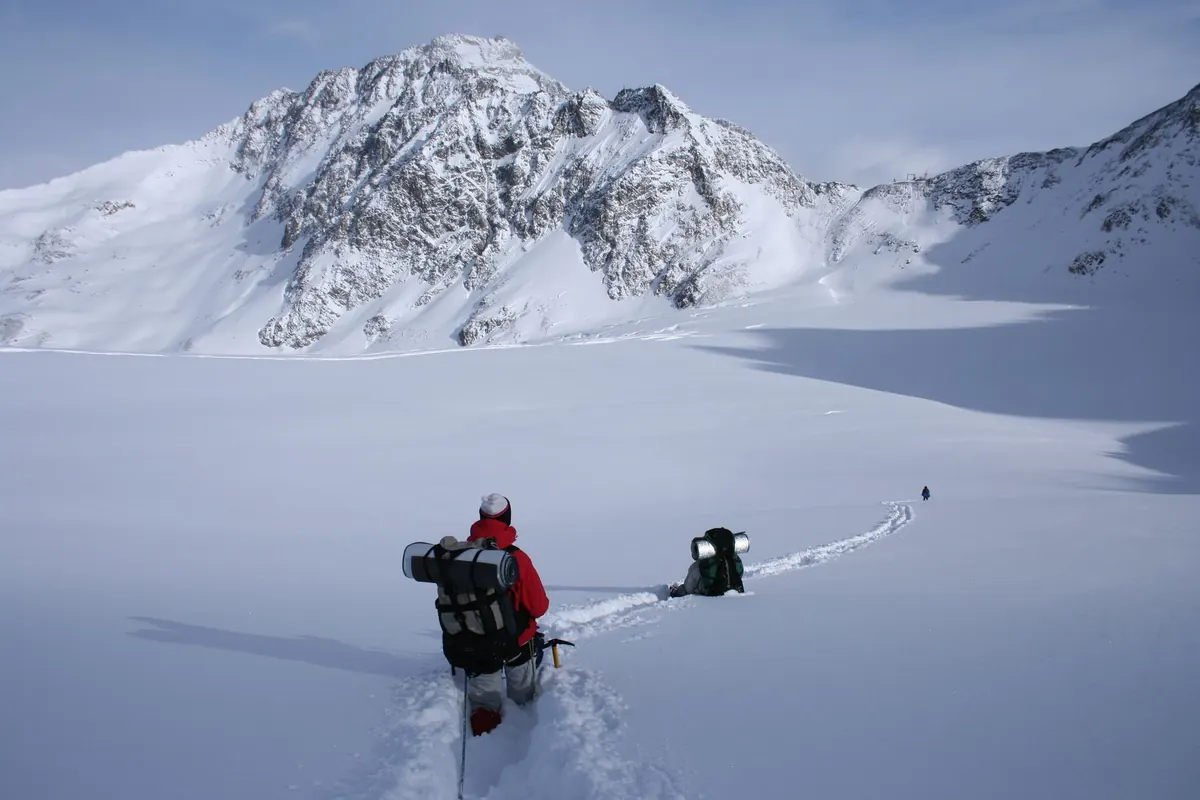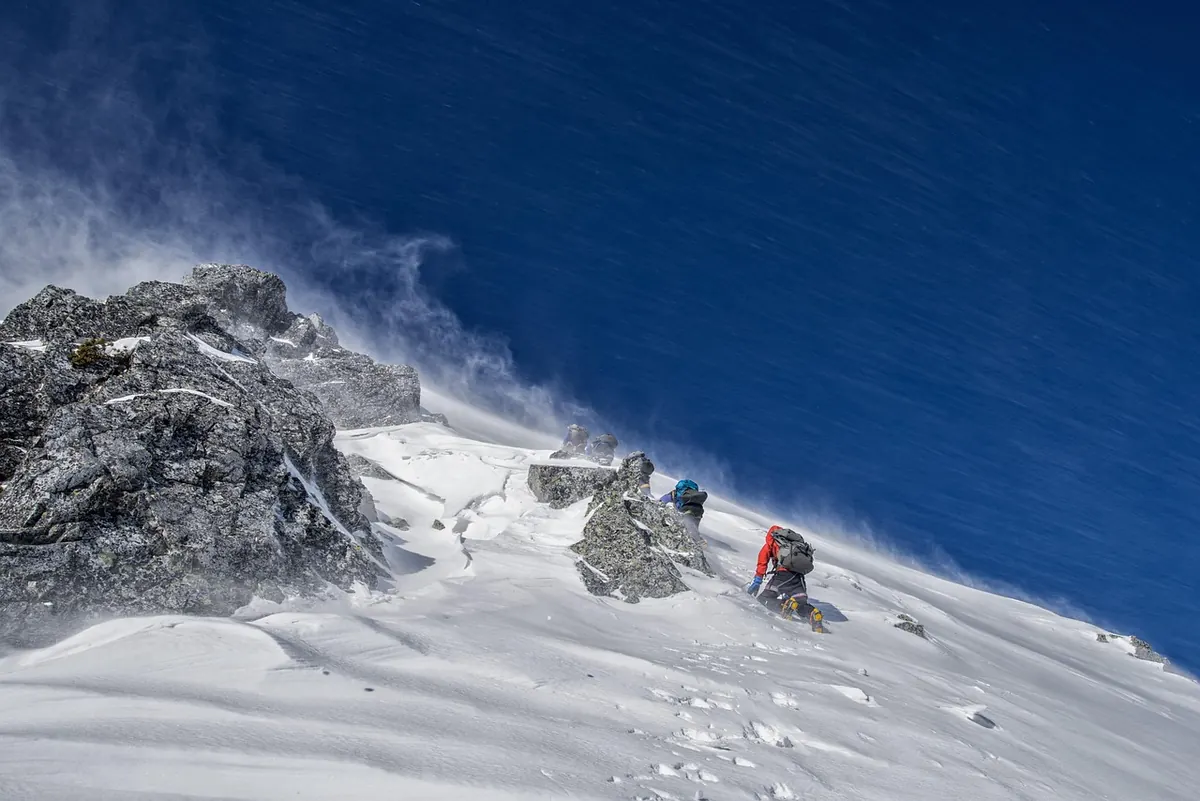
There's a particular quiet that arrives at minus fifteen. Sound carries strangely, your water bottle turns to slush, and the zip on your jacket stiffens into something you have to argue with. Cold-weather trips are among the most rewarding journeys you can take — and the least forgiving when the kit is wrong.
The good news is that you don't need exotic equipment. You need a system: layers that work together, a sleep setup that insulates underneath you as well as over you, and a safety kit you have actually handled before. What follows is a working checklist for winter hillwalking, snowshoeing, ski touring and camping anywhere the forecast sits stubbornly below freezing. Adjust the quantities to your trip. The principles hold.
Cold-weather clothing has three jobs: move moisture away from your skin, trap warmth, and block wind and wet. Every item you pack should do at least one of those things well. Cotton does none of them.
Your base layer should be merino or synthetic and sit close to the skin without bunching. Pack two sets for anything multi-day, because a damp base layer is the fastest route to a miserable evening. Above that, two thin mid-layers — a fleece and a light synthetic — beat one thick jumper, because you can vent one and keep the other on when you're working hard.
Then the shell. A waterproof, windproof jacket with pit zips and a hood that fits over a hat will do more for you than any single piece of insulation. Check the hood actually stays up in wind before you rely on it.
The moment you stop moving, you cool fast. A large synthetic belay jacket that goes on over everything — kept at the top of your pack, not buried at the bottom — transforms rest stops and summit breaks. Synthetic fill copes better than down with the damp that accumulates over a long day.
Your extremities get cold first, not because they're weak but because your body protects its core before its fingers. Give them a head start.
Thin liner gloves give you the dexterity to fiddle with buckles and stove valves; insulated mittens over the top keep you warm. Mittens beat gloves on every genuinely cold day. Carry at least two spare pairs, and choose mittens with long cuffs that cover your wrists so snow can't creep in.
Pack a thin hat for moving and a thick one for camp, plus a balaclava or neck gaiter for wind. Ski goggles for spindrift and driving snow, sunglasses for bright days — snow reflects sunlight even under thin cloud, so take high-factor suncream and lip balm too.
The most common mistake in cold camping is trusting a sleeping bag's temperature rating while ignoring what's underneath. A surprising amount of your heat disappears into the ground, so the mat matters as much as the bag.
Choose a bag rated comfortably below the coldest temperature you expect — not equal to it — and pair it with a closed-cell foam mat beneath an inflatable one. That combination has rescued more cold nights than any single piece of kit. Add a silk or vapour-barrier liner for extra degrees, and use a stuff sack filled with a fleece as a pillow. A wide-mouth bottle filled with hot water, wrapped in a sock and tucked into the foot of your bag, will keep you warm for the first hour of sleep.
Keep one set of socks and one base layer strictly for sleeping. Climbing into a bag wearing the day's damp clothes guarantees a cold night and a colder morning.
This is where winter trips diverge from summer ones. Cold breaks things: batteries fade, electronics shut down, fuel misbehaves. Build your kit around that reality.
Learn the early signs of hypothermia and frostbite before you go, and know how you'd respond as a group. If you're heading somewhere remote, a wilderness first-aid course is money well spent, and any personal medical concerns are worth raising with a doctor beforehand.
You burn more energy in the cold, so pack more than you think you need and make it easy to eat with gloves on. Frozen energy bars turn into dental hazards, so keep them in an inside pocket. Nuts, cheese, chocolate, boiled sweets and a flask of something hot cover most situations well.
Water freezes faster than you expect. Use wide-mouth bottles, insulate them, carry them upside down so the neck freezes last, and start the day with hot water in one of them. For stoves, liquid-fuel models generally outperform canisters in deep cold; if you take a canister stove, keep the canister warm inside your jacket and always use a windshield. Never cook inside a closed tent — carbon monoxide is a genuine killer, so ventilate properly or cook outside.
Run through this the night before you leave, physically touching each item rather than relying on memory.
Pack in reverse order of need: the belay jacket, gloves and flask go on top, sleeping kit at the bottom. Test new boots around the house before you commit to a long day in them, and practise pitching your shelter in gloves at least once. Check the forecast the morning you leave, tell someone your route and expected return time, and set a turnaround point you'll actually honour.
Cold weather rewards preparation more than any other condition. Get the system right, and the shivering stops being something you endure and becomes something you simply plan around.
Photo: Kanenori / Pixabay