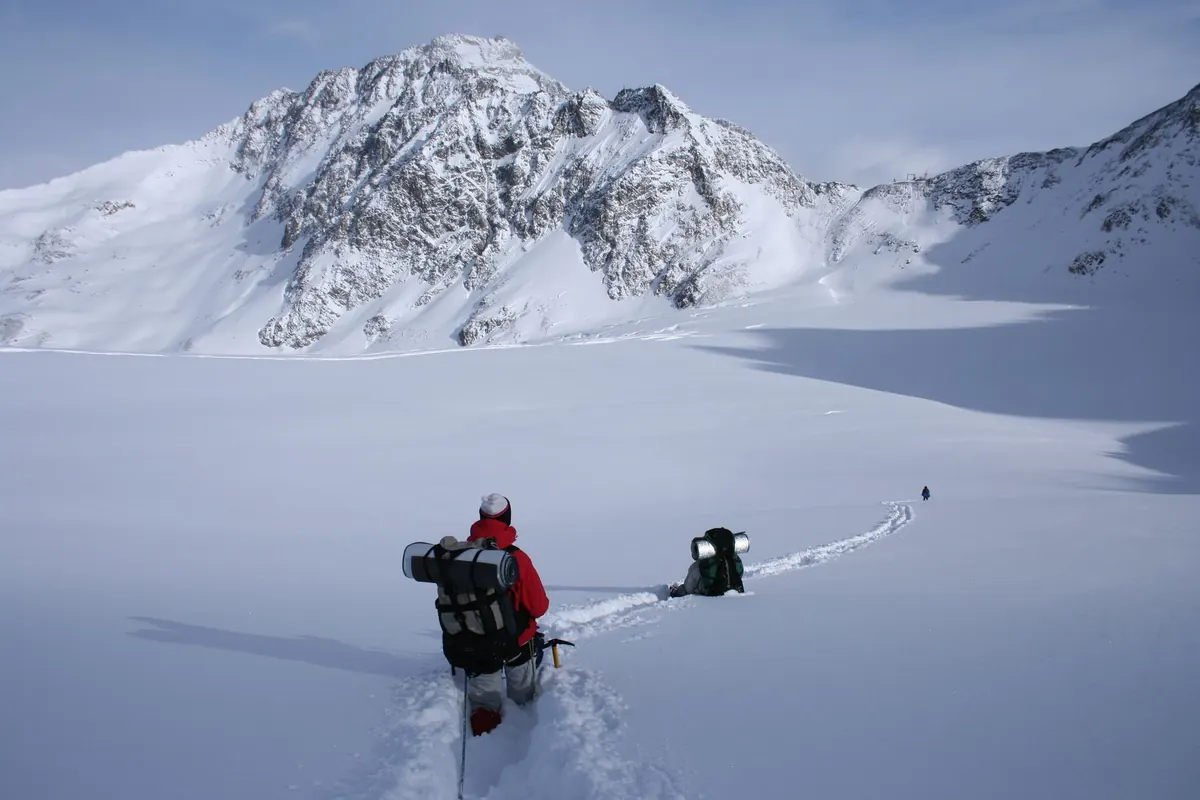
A via ferrata is a protected climbing route: steel cable, iron rungs, staples and ladders bolted into the rock, so you can climb ground that would otherwise need ropes and a partner who knows how to use them. Cross a ledge above Cortina with 400 metres of air under your boots and the cable is the only thing between an easy day out and something else entirely. The Dolomites are where the idea was born — Italian soldiers strung the first routes up these peaks during the First World War — and there are now hundreds of lines across the range, from gentle two-hour scrambles to full-day epics.
The good news for a first-timer: you don't need to be a climber. You need reasonable fitness, a head for heights, the right kit and an honest sense of your own limits.
Most beginner routes are a mix of walking, scrambling and short sections of climbing. You move along the cable with two lanyards attached to your harness, keeping at least one clipped in at all times — never unclipped both at once. Where the rock steepens, you pull on rungs or staples; where it doesn't, you walk.
Effort varies wildly. A short route might be 90 minutes up and 45 minutes down. Others run six to eight hours with 900 metres of ascent, a hut at the top and a descent that involves more cable work. Guidebooks measure these routes in time, not kilometres, and that time assumes steady movement and no queueing.
Exposure is the real variable. Some cables protect a wide ledge with a grassy slope below. Others traverse a vertical wall where a slip would be serious if the protection failed. That is why the grade matters more than the length.
You can hire most of this in Cortina, Corvara, Arco or San Martino di Castrozza, which makes sense for a first trip.
Optional but useful: knee pads for routes with a lot of rung work, trekking poles for the approach, and a camera that is attached rather than dangling.
Two scales are in common use, and it's worth knowing which one your guidebook is following. The Italian scale runs from 1 (easy) to 5 (extremely difficult), sometimes with a letter for extra detail. The German and Austrian scale, often called the Schall scale, runs from A to F. As a rough comparison, Italian 1–2 corresponds to A–B, Italian 3 to C, and so on.
For a first route, stay at Italian 1 or 2 (A–B). That means sustained cable protection on ground you could almost scramble, short steep steps and no need to hang off your arms. Anything graded 3 and above starts to demand real technique.
Grades describe the hardest move on the route in good conditions. Rain, lingering snow, ice, a heavy pack or a slow party ahead all make it harder. A line that feels straightforward in a dry July can be a different proposition in early June.
You can do a beginner via ferrata without a guide if you're comfortable on exposed ground and have practised clipping. Even so, hiring a mountain guide for the first day is money well spent. In Italy, look for a Guide Alpine (IFMGA-qualified) or a reputable mountain school running introduction days. A guide will check your kit, teach the clipping sequence before you leave the ground, pick a route that suits the group and keep an eye on the weather.
Typical format is a half-day or full-day course, kit included, small group. Ask for a group rate rather than a private booking if budget matters. If you go unguided, go with someone experienced, leave your plan with someone at home, and be willing to turn around.
Check your insurance before you book. Many standard travel policies exclude climbing and via ferrata, and helicopter rescue in the mountains is expensive. Look for specific alpine or via ferrata cover and ask the insurer directly what is included.
These are all in the Cortina and Alta Badia area, well documented in guidebooks and reasonably easy to reach.