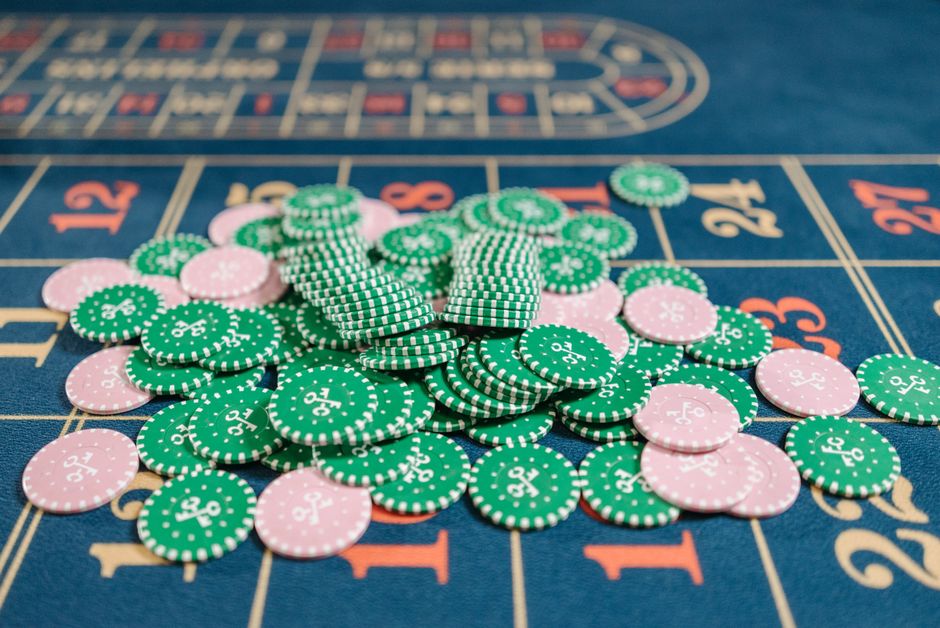
Most people lose money online. Not because the games are rigged, but because they walk in with the wrong mental model. They think they're playing against the casino, when really they're playing against a mathematical structure that was designed decades ago to grind out a small, predictable profit every single hour. The sooner you understand that structure, the sooner you can decide whether you're gambling for entertainment, chasing an edge, or just burning cash in a very pretty interface.
This piece is for the player who wants to be honest about what iGaming actually is. We're going to look at slots, poker, sports betting, and the systems behind them — not with hype, but with the kind of clarity you'd want from a friend who's been in the industry trenches. If you want to dig deeper, mahjong slot is worth a look.
Let's kill one myth immediately: slots and poker are not just two flavors of the same hobby. They are structurally opposite.
In poker, you play against other humans. The house takes a rake — typically 5% to 10% of each pot — and the rest is a skill game. A good player can beat $1/$2 no-limit hold'em for years. The edge comes from reading ranges, managing position, and picking spots. It's work, but the edge is real and repeatable.
In slots, you play against a random number generator. There is no table dynamic, no bluffing, no exploitable opponent. Every spin is independent. The house edge on modern video slots usually sits between 2% and 8% depending on the game and the jackpot structure. That's not a small number. A 4% edge means that for every $1,000 you cycle through the machine, you're statistically handing over $40. Over a thousand spins at $1 each, that's your expected loss. Variance can hide it for a session, but it never disappears.
So when someone says “I'm going to grind slots for a living,” they mean “I'm going to hope variance is kind for a long time.” That's not a strategy. It's a bet on luck holding.
If you're going to play slots, at least play them intelligently. The difference between a smart and a lazy slot player comes down to three things:
A practical tip: if you have a $200 bankroll and you're playing a high-volatility slot at $2 per spin, you're giving yourself 100 spins. That's nothing. At $0.50 per spin, you get 400 spins, which is enough to actually experience the game's variance curve. Scale your bet to your bankroll, not to your ego.
Sports betting feels more analytical than slots, and in some ways it is. But most recreational bettors still lose — not because they pick wrong, but because they don't respect the vig.
The vig, or juice, is the commission the sportsbook builds into the odds. On a standard -110/-110 line, you have to win 52.4% of your bets just to break even. That's the hidden tax. If you're winning 50% of your picks, you're not a break-even bettor — you're a losing one.
The single most impactful thing a casual bettor can do is shop lines. Different books offer different prices on the same game. Getting -105 instead of -110 doesn't sound like much, but over 500 bets it can be the difference between a small profit and a slow bleed. Using multiple regulated sportsbooks and taking the best number on every bet is the closest thing to a free edge most people will ever get.
Also, stop betting parlays for the thrill. Correlation is your enemy, and the odds compound against you. A three-leg parlay at -110 each pays roughly +596, but your true win probability is much lower than the payout implies. Single bets are boring and profitable. Parlays are exciting and expensive.
Poker remains the most intellectually honest game in iGaming. If you're better than your opponents, you win over time. If you're worse, you lose. There's no RNG hiding your mistakes.
But online poker is tougher than it was in 2008. Solvers, tracking software, and a global player pool mean the average regular is sharper than ever. If you want to make money at low stakes, focus on these:
You don't need to be a genius. You need to be patient, disciplined, and willing to fold a lot. The money comes from opponents who can't do either.
Here's the hard truth: most iGaming losses aren't caused by bad games. They're caused by terrible bankroll management. Players deposit $100, bet $5 a spin, and wonder why they're broke in an hour. Or they chase losses with bigger bets, which is the fastest way to turn a bad session into a catastrophic one.
A reasonable framework:
If you can't follow these numbers, you're not gambling — you're paying for entertainment at a premium price. That's fine if you're honest about it. It's dangerous if you're not.
iGaming isn't evil. It's a product, and like any product, it's designed to make money for the operator. The slots have an edge. The sportsbook has a vig. The poker room has a rake. None of that is a secret — it's all in the terms and conditions nobody reads.
What separates a smart player from a mark isn't luck or secret systems. It's understanding the math, respecting the variance, and knowing exactly why you're playing. If you're playing for fun, set a budget and stick to it. If you're playing for profit, pick the games where skill actually matters and treat it like a job. And if you're playing to win back what you lost — stop. That's not a strategy. That's the house edge doing exactly what it was built to do.